Insight
Feb 10, 2026
AI Solutions for Business: Smart Inventory Optimization for Retail Enterprises

Neha Sharma
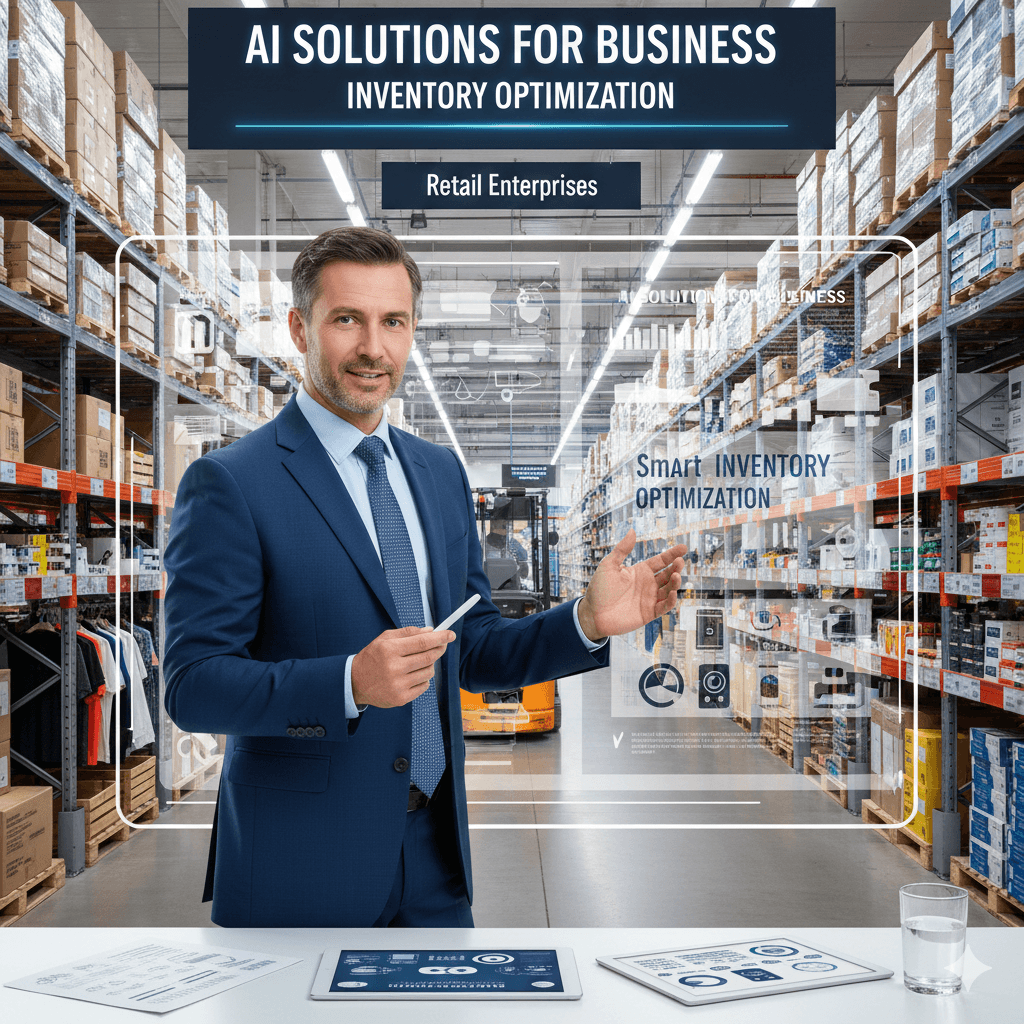
Unlock the future of retail with AI solutions that optimize inventory management, boost efficiency, and enhance customer satisfaction. Discover smart strategies today!
The Importance of Inventory Optimization
Inventory optimization has always been a critical aspect of retail business management. Efficient inventory control ensures that a retailer has the right products in the right quantities at the right time, minimizing surplus and reducing stockouts. This balance is crucial for maintaining customer satisfaction while also controlling costs. In today's competitive market, the margin for error is slim, and any mismanagement can lead to lost sales, excess inventory costs, or both. Hence, optimizing inventory is not just a logistics issue; it's a strategic imperative.
Retailers face the dual challenge of meeting fluctuating customer demands while keeping operational costs in check. Traditional inventory management methods, relying on historical sales data and manual adjustments, often fall short in addressing these dynamic market conditions. They are frequently reactive rather than proactive, leading to inefficiencies such as overstocking or stockouts. In contrast, smart inventory optimization leverages advanced technologies to anticipate demand accurately and adjust inventory levels in real-time.
Moreover, the advent of e-commerce and omnichannel retailing has further complicated inventory management. With multiple sales channels and fulfilment options, retailers must synchronise inventory across stores, warehouses, and online platforms. This complexity necessitates a more sophisticated approach to inventory optimization. The integration of Artificial Intelligence (AI) into inventory management systems offers a transformative solution, providing retailers with the tools to navigate this complex landscape effectively.
How AI Transforms Inventory Management
AI has revolutionized various facets of business operations, and inventory management is no exception. AI-powered inventory systems are designed to analyze vast amounts of data, identifying patterns and predicting future trends with remarkable accuracy. These systems can process data from multiple sources, including sales records, market trends, and customer behavior, to forecast demand more precisely than traditional methods. This predictive capability allows retailers to plan their inventory needs proactively, reducing the risk of overstocking or understocking.
One of the most significant ways AI transforms inventory management is through machine learning algorithms. These algorithms continuously learn from new data, refining their predictions over time. For example, an AI system can analyze seasonal trends, promotional impacts, and even social media influences to adjust inventory levels dynamically. This continuous learning process ensures that inventory decisions are based on the most current and relevant information, leading to more accurate and efficient stock management.
AI also enhances inventory visibility and tracking. Advanced AI systems can integrate with Internet of Things (IoT) devices and sensors to provide real-time insights into inventory levels and location. This integration enables retailers to monitor their stock across various channels and locations, providing a comprehensive view of their inventory at any given moment. Such real-time visibility is crucial for managing supply chains efficiently, reducing lead times, and ensuring that products are available where and when customers need them.
Key AI Technologies for Inventory Optimization
Several advanced AI technologies are instrumental in optimizing inventory management. Machine learning, as mentioned earlier, plays a pivotal role by analyzing data and generating accurate demand forecasts. These algorithms can handle complex datasets, identifying subtle patterns that human analysts might miss. By continuously learning from new data, machine learning models improve their predictive accuracy over time, making them invaluable for dynamic inventory management.
Another critical technology is natural language processing (NLP). NLP enables AI systems to understand and interpret human language, facilitating better communication between retailers and their inventory systems. For instance, NLP can be used in chatbots to assist with inventory inquiries or in analyzing customer reviews and feedback to gauge product popularity. This technology helps retailers understand market sentiment and adjust their inventory strategies accordingly.
Computer vision is also making significant strides in inventory optimization. By using cameras and image recognition software, computer vision systems can monitor stock levels on shelves and in warehouses automatically. This technology can detect when items are running low or misplaced, triggering alerts to restock or reorganise. Computer vision reduces the need for manual inventory checks, saving time and minimising human error. Combined with AI, these technologies provide a comprehensive solution for smart inventory optimisation.
Benefits of Smart Inventory Optimization
Implementing AI-driven inventory optimisation offers a multitude of benefits for retail enterprises. One of the most immediate advantages is improved accuracy in demand forecasting. By leveraging AI algorithms, retailers can predict customer demand with greater precision, ensuring that they stock the right products in the right quantities. This accuracy minimizes the risk of overstocking, which ties up capital and incurs storage costs, and understocking, which leads to lost sales and dissatisfied customers.
Another significant benefit is the reduction in operational costs. AI systems can optimize reorder points and quantities, ensuring that inventory is replenished efficiently. This optimization reduces the need for emergency shipments or expedited orders, which are often costly. Additionally, with better inventory visibility and tracking, retailers can streamline their supply chain operations, reducing lead times and lowering overall logistics costs. These cost savings directly impact the bottom line, making AI-driven inventory optimization a financially prudent investment.
Customer satisfaction is also greatly enhanced through smart inventory optimization. When retailers can ensure the availability of popular products and minimize stockouts, customers are more likely to have a positive shopping experience. Moreover, AI can help retailers personalize their inventory offerings based on customer preferences and buying behavior. By tailoring product assortments to meet specific customer needs, retailers can foster loyalty and increase repeat business. Ultimately, smart inventory optimization not only improves operational efficiency but also drives customer engagement and satisfaction.
Case Studies: Successful AI Implementation in Retail
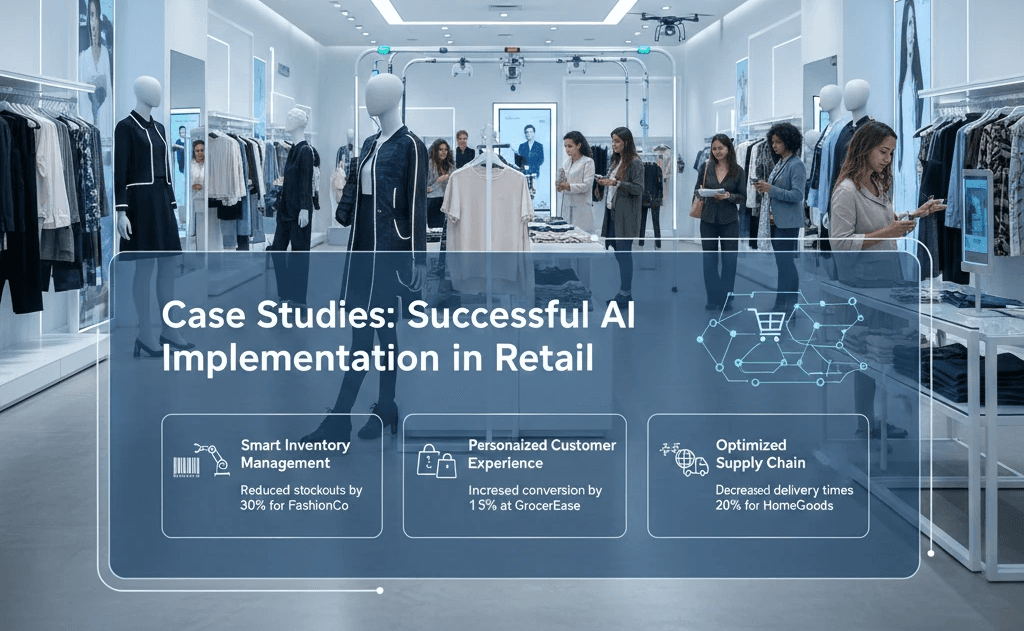
Several retail enterprises have successfully implemented AI solutions to optimize their inventory management, showcasing the transformative potential of this technology. For instance, Walmart, one of the largest retailers globally, has leveraged AI to enhance its inventory processes. By integrating machine learning algorithms and IoT sensors, Walmart has achieved real-time inventory visibility across its vast network of stores and distribution centers. This integration has enabled the company to reduce stockouts significantly and improve overall supply chain efficiency.
Another notable example is Zara, the fashion retailer known for its fast-fashion model. Zara has adopted AI-driven demand forecasting to manage its inventory more effectively. The company uses machine learning algorithms to analyze sales data, fashion trends, and customer feedback, allowing it to predict demand with high accuracy. This predictive capability enables Zara to adjust its production and inventory levels dynamically, ensuring that it can respond swiftly to changing fashion trends and customer preferences.
Amazon, the e-commerce giant, has also set a benchmark in AI-powered inventory optimization. Amazon utilizes a sophisticated AI system that incorporates machine learning, NLP, and computer vision to manage its vast inventory. This system can predict customer demand, optimize warehouse operations, and automate restocking processes. As a result, Amazon has achieved unparalleled efficiency in its supply chain, enabling it to offer fast and reliable delivery services to customers worldwide. These case studies demonstrate how AI can revolutionize inventory management, driving both operational excellence and customer satisfaction.
Challenges in Adopting AI for Inventory Management
Despite the numerous benefits, adopting AI for inventory management comes with its own set of challenges. One of the primary obstacles is the significant investment required in technology and infrastructure. Implementing AI solutions often involves upgrading existing systems, integrating new technologies, and training staff to use these advanced tools effectively. For many retailers, especially smaller enterprises, these costs can be prohibitive, making it difficult to justify the investment.
Another challenge is data quality and availability. AI systems rely heavily on large volumes of accurate and relevant data to function effectively. However, many retailers struggle with data silos, where information is scattered across different systems and departments, making it difficult to aggregate and analyze. Ensuring data accuracy and consistency is crucial for AI algorithms to generate reliable predictions. Retailers must invest in robust data management practices and technologies to overcome this hurdle.
There are also concerns related to change management and employee resistance. The introduction of AI-driven processes can significantly alter existing workflows and job roles, leading to uncertainty and apprehension among staff. Employees may fear job displacement or struggle to adapt to new technologies. Effective change management strategies, including clear communication, training programs, and involving staff in the transition process, are essential to address these concerns and ensure a smooth implementation of AI solutions in inventory management.
Best Practices for Implementing AI Solutions
To successfully implement AI solutions for inventory optimization, retailers should follow several best practices. First and foremost, it is crucial to start with a clear strategy and defined objectives. Retailers must identify specific pain points in their inventory management processes and set measurable goals for improvement. This strategic approach ensures that AI initiatives are aligned with business objectives and deliver tangible benefits.
Data readiness is another critical factor. Retailers should conduct a thorough assessment of their data assets, identifying gaps and inconsistencies that need to be addressed. Investing in data cleaning and integration tools can help ensure that the data fed into AI systems is accurate and comprehensive. Additionally, retailers should establish strong data governance practices to maintain data quality and security over time.
Collaboration and stakeholder engagement are also vital for successful AI implementation. Involving key stakeholders, including IT, operations, and sales teams, ensures that the AI solution is tailored to the needs of the business and has broad support within the organization. Regular communication and training sessions can help employees understand the benefits of AI and how it will impact their roles, reducing resistance and fostering a culture of innovation. By following these best practices, retailers can maximize the potential of AI-driven inventory optimization.
Future Trends in AI and Retail Inventory
The future of AI in retail inventory management is both exciting and promising. One of the emerging trends is the use of advanced analytics and AI for hyper-personalization. Retailers are increasingly leveraging AI to analyze customer data and deliver personalized product recommendations and promotions. This trend is likely to extend to inventory management, where AI can help retailers curate personalized assortments and optimize stock levels based on individual customer preferences and buying behavior.
Another significant trend is the integration of AI with other emerging technologies such as blockchain and IoT. Blockchain can enhance transparency and traceability in the supply chain, providing a secure and immutable record of inventory transactions. When combined with AI, blockchain can help retailers track products from production to sale, ensuring authenticity and reducing the risk of fraud. IoT, on the other hand, can provide real-time data on inventory levels and conditions, enabling AI systems to make more informed decisions and automate inventory management processes further.
Sustainability is also becoming a key focus area for retailers, and AI can play a crucial role in promoting sustainable inventory practices. By optimising inventory levels and reducing waste, AI can help retailers minimize their environmental footprint. Additionally, AI can support circular economy initiatives by facilitating the management of returned goods and promoting the reuse and recycling of products. As sustainability becomes increasingly important for consumers and regulators, AI-driven inventory optimisation will be essential for retailers looking to meet these expectations.
Conclusion: Embracing AI for Competitive Advantage
In conclusion, AI solutions offer a powerful means for retail enterprises to optimize their inventory management processes. By leveraging advanced technologies such as machine learning, natural language processing, and computer vision, retailers can achieve greater accuracy in demand forecasting, enhance inventory visibility, and reduce operational costs. The benefits of smart inventory optimization extend beyond efficiency gains, driving customer satisfaction and loyalty through better product availability and personalized offerings.
However, adopting AI for inventory management is not without its challenges. Retailers must be prepared to invest in the necessary technology and infrastructure, ensure data quality, and manage organizational change effectively. By following best practices and involving key stakeholders, retailers can overcome these obstacles and unlock the full potential of AI-driven inventory optimization.
Looking ahead, the future of AI in retail inventory management is bright, with emerging trends such as hyper-personalization, integration with blockchain and IoT, and a focus on sustainability. Retailers that embrace these trends and continue to innovate with AI will gain a competitive advantage in the market. Ultimately, AI is not just a tool for optimization but a strategic enabler that can transform retail operations and drive long-term success.